
🌴Why Have I Never Heard of Vila Real de Santo António
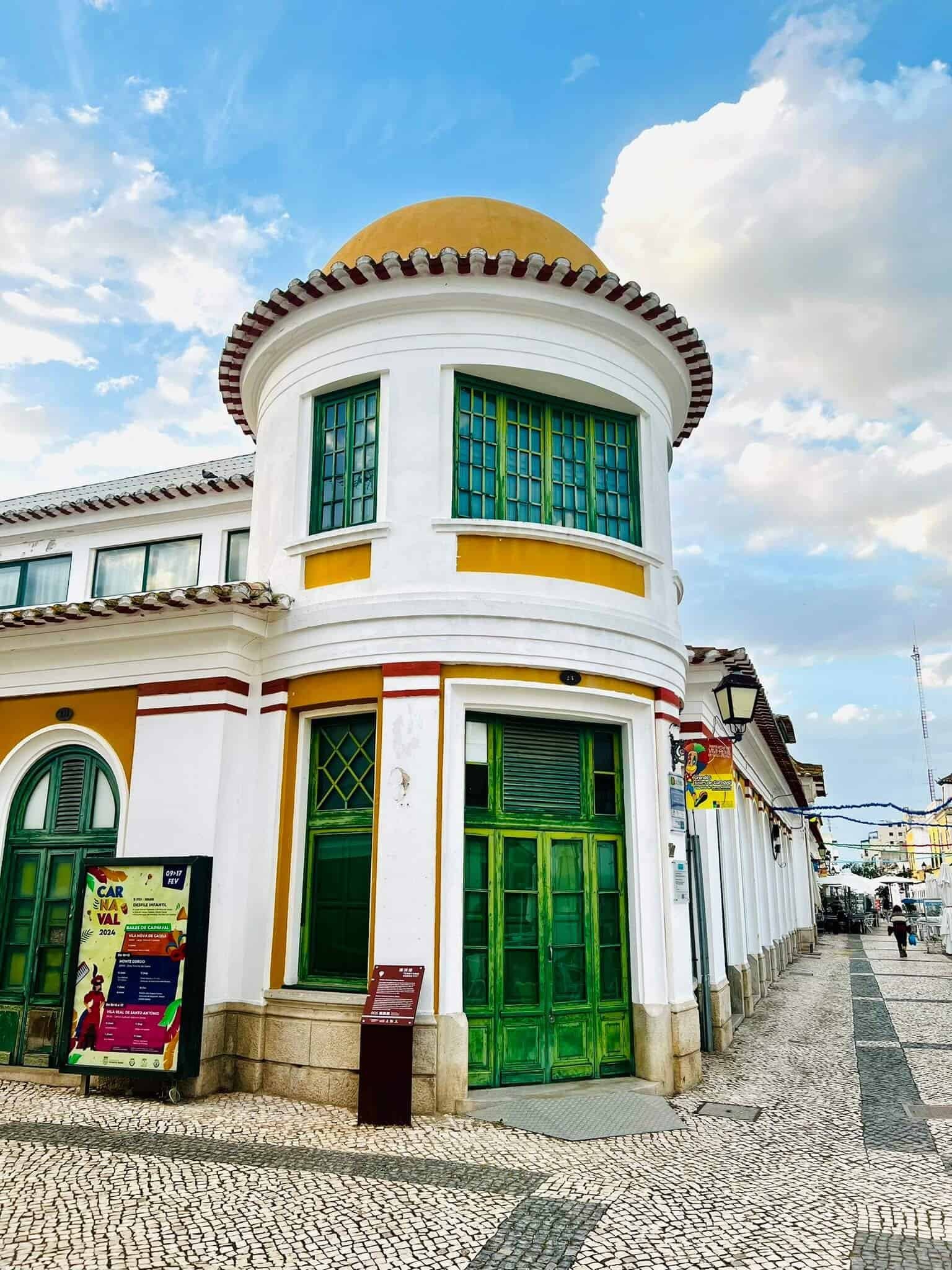
Discover Vila Real de Santo António, a city that sits quietly among the Algarve’s best-kept secrets — and we honestly hope it stays that way. There’s no mass tourism here, just the calm rhythm of everyday Portuguese life. When the school bell rings, the streets fill with children on their way to class, while the older locals chat beneath the orange trees on the beautiful Praça Marquês de Pombal — the city’s elegant central square (more on that name later).
You’ll find hotels, cafés, and small restaurants, but nothing overwhelming. Unlike Portimão or Albufeira, where tourism has taken over completely, Vila Real de Santo António still feels like real Portugal. To truly appreciate this hidden gem, you must Discover Vila Real de Santo Antonio.
In another blog, we talk about the best things to see and do around town. But here, let’s take a look at the fascinating history of this charming riverside city.
As you explore, make sure to discover Vila Real de Santo Antonio and immerse yourself in its unique culture.
Destroyed by a Tsunami (!)
On November 1st, 1755, a massive earthquake struck Portugal — the Great Lisbon Earthquake. Its epicenter was about 200 km southwest of Lisbon, with an estimated magnitude of 8.5–9.0 on the Richter scale. It was one of the strongest earthquakes ever recorded in Europe, followed by a powerful tsunami that wiped out several coastal towns, including what was then just a small fishing village: Vila Real de Santo António.
A Copy of Lisbon
After the disaster, the Marquis of Pombal — Sebastião José de Carvalho e Melo — was tasked with rebuilding Lisbon. He designed the city’s new layout with straight, wide streets and earthquake-resistant buildings, a revolutionary idea at the time.
When it came time to rebuild Vila Real de Santo António, the Marquis applied the same concept here. The town’s grid pattern and central square (named after him: Praça Marquês de Pombal) mirror the “Baixa” district of Lisbon.
Legend has it that much of the town was prefabricated and shipped by boat — and completed within just one year. For the 18th century, that was lightning fast.
The First Canned Fish Factory
In 1865, a man named Sebastian Ramirez opened the country’s first fish-canning factory right here in VRSA. Sardines were cleaned, cooked, and packed in olive oil or tomato sauce — a groundbreaking method that allowed fish to be stored longer and shipped around the world.
For decades, Vila Real de Santo António became the heart of Portugal’s canning industry, at one point home to 40 (!) factories. Today, only one remains: Conservas Damaso.
The Algarve’s First Luxury Hotel
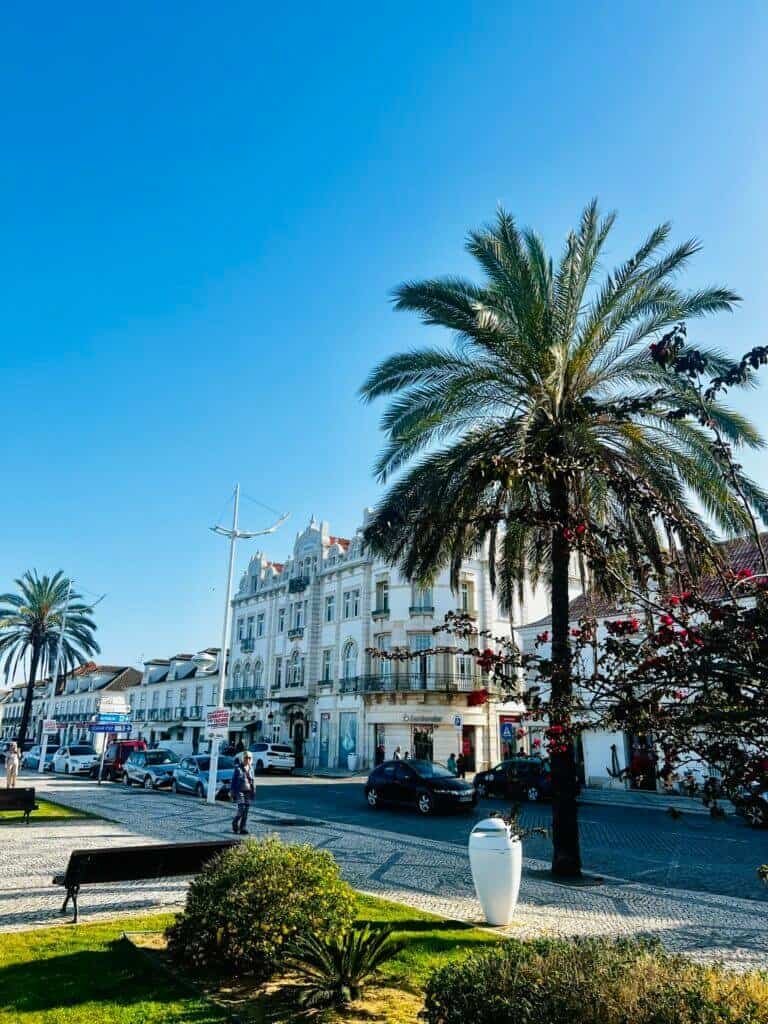
It was the same Ramirez family who first saw the region’s tourism potential. Overlooking the Guadiana River and neighboring Spain, they built the Hotel Guadiana in 1926 — the Algarve’s very first luxury hotel.
Designed by Swiss architect Ernesto Korrodi, who created more than 400 buildings across Portugal, the hotel was lovingly restored in 2019 and reopened as the Grand Hotel Algarve.
Even if you don’t stay there (it’s not cheap!), the building itself is worth a look — a reminder of the region’s glamorous past.
A Strategic Defense Point
Vila Real de Santo António sits at the mouth of the Guadiana River, the natural border between Portugal and Spain. Today, a modern bridge and a ferry links the two countries — the ferry runs hourly between Vila Real de Santo António and Ayamonte, its Spanish sister town across the river.
But centuries ago, the area was a key defensive frontier.
In nearby Castro Marim, two impressive fortresses remain: the Castelo de Castro Marim, built in the 13th century to fend off Moorish and later Spanish invasions, and the Forte de São Sebastião, built in the 17th century on the opposite hill. The castle is still open to visitors; the fort, sadly, is not.
Home of Olympic Medals
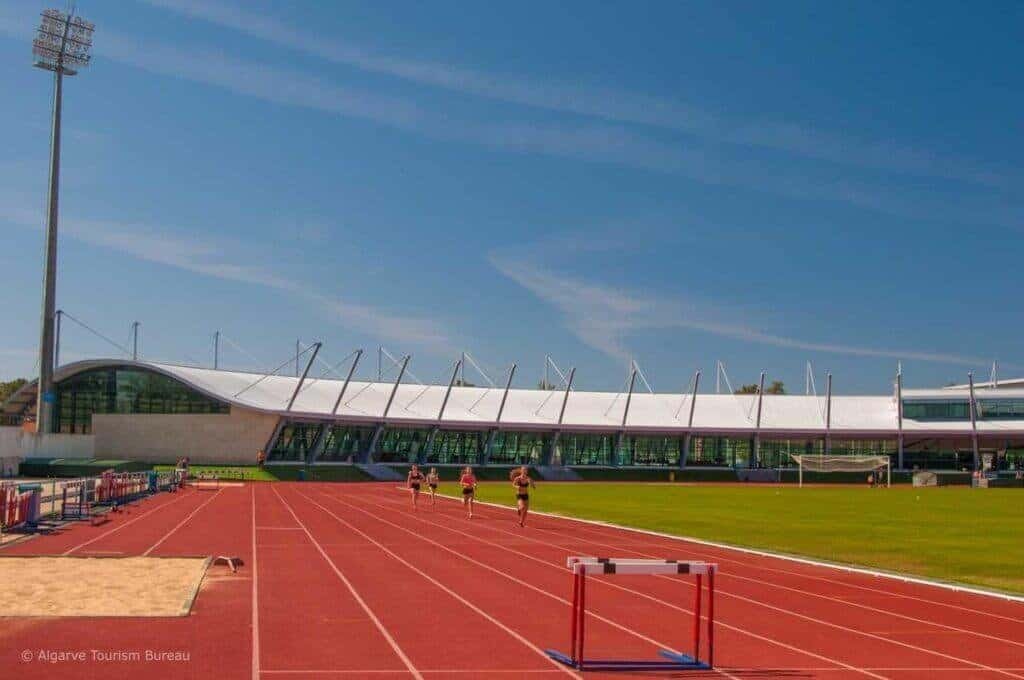
At the edge of town lies the Complexo Desportivo de Vila Real de Santo António, one of Europe’s most advanced athletics training centers.
It may look modest from the outside, but it’s world-class inside. Olympic champion high jumper Yaroslava Mahuchikh from Ukraine trained here for months before winning gold in Paris 2024.
The complex includes a modern athletics track, large gym, tennis and padel courts, and both 25m and 50m swimming pools.
During the winter months, teams from across northern Europe — football, athletics, swimming, triathlon — come here to train under the mild Algarve sun.
Still Wondering Why You’ve Never Heard of It?
That’s exactly what makes Vila Real de Santo António so special. It’s authentic, historical, and beautifully unspoiled — a rare place where you can still experience the real Algarve without the crowds.
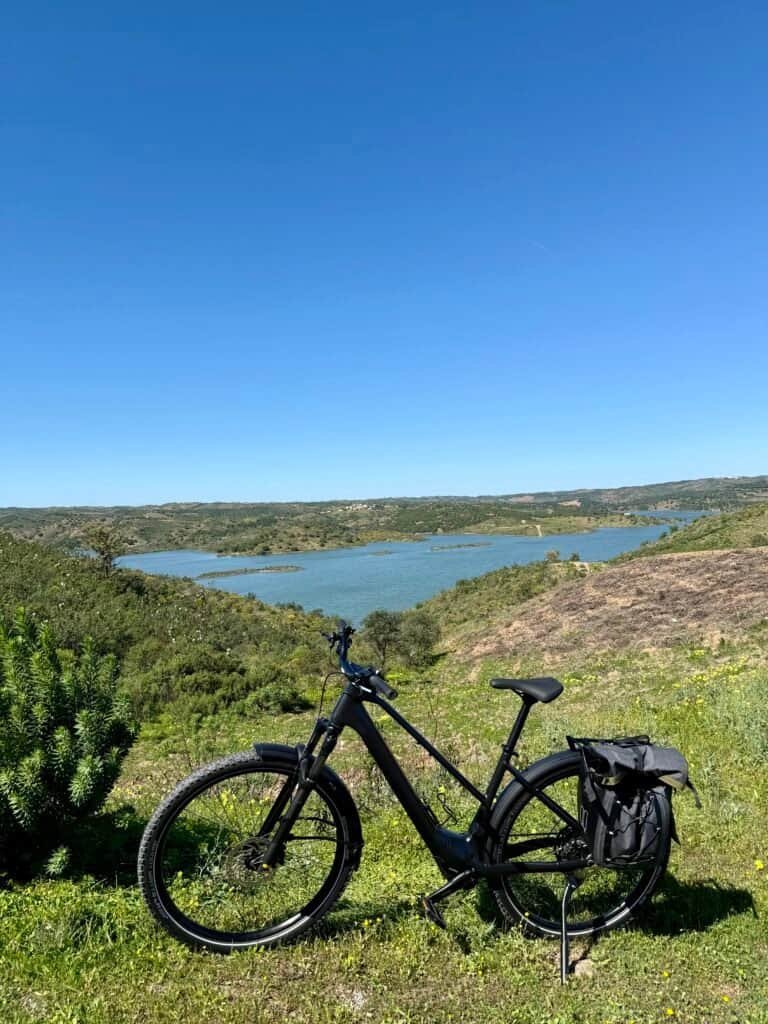
Come discover it for yourself. And when you do, stop by Café Vélo for a good coffee, a local lunch, or even a bike to explore the coast.

One Comment